anachronym

15 April 2026
No, that’s not a typo for acronym. An anachronym is a term whose original meaning has become anachronistic but which continues to be used for a more current application. Examples of anachronyms include dialing a phone, footage (originally referring to the length of movie film), cc (carbon copy), and dashboard (a double anachronym, originally referring to a board protecting passengers in carriage from splashes of mud, then a control panel in a car, and more recently a digital interface on a device or in software).
The term dates to at least 10 March 2012, when W. Brewer used it in a post to the American Dialect Society email list (ADS-L):
Anachronyms. My favorites are telephone expressions. Hang up your phone, it is off the hook. Phone is ringing. I dialed the wrong number. Address book. Yellow pages.
And in another post to ADS-L on 2 April 2012, Brewer claimed to have coined the term, which may very well be true:
Greek nautia ~ nausia (seasickness) < naus (ship); cf. nautik-os (seafaring), nautil-os (sailor); pIE *na:us (boat). Preservation of Latin form NAUSEA, extension of meaning (seasick, carsick, airsick, morning sickness): According to Wilson's statement, English NAUSEA has completely lost its association with the sea, and hence fits my definition of an ANACHRONYM (my coinage).
The term seems to have languished for another dozen years until Benjamin Dreyer used it in a 12 March 2024 article in the Washington Post online edition:
But if Twitter has been X'd out and tweets are no longer tweets but posts instead, what is to become of the useful coinage “subtweet”?
Given that the word now has become a generic term used on other social media platforms (hello, my friends at Bluesky), I suspect that “subtweet” will join the ranks of what are known as anachronyms: words that are used “in an anachronistic way, by referring to something in a way that is appropriate only for a former or later time.”
That's the way Wikipedia defines them, which will have to suffice for now, because the word is too new to have worked its way into dictionaries.
That article seems to have inspired a similar one on 25 March 2024 in the Atlantic which quotes linguist Ben Zimmer using anachronym:
Besides, it wasn’t a simple self-portrait but a group shot with a dozen people in it. (That’s not a “selfie,” but a “group selfie” or a “groupie,” some have suggested.)
What is happening to the selfie?
At first glance, it seems it may be turning into what linguist Ben Zimmer calls an “anachronym,” a word or phrase that remains in usage even as behaviors change.
“The accumulated cultural knowledge of past technologies ends up powerfully shaping the way we talk about new technologies,” Zimmer told me. “Think about the terms that we use for telephones, for instance. We still talk about ‘dialing.’ And we talk about ‘taping’ something even if it’s on the DVR. Sometimes what we’re left with is language that’s sort of obsolete.”
The opposite of an anachronym would be a retronym, that is a newly coined term used to refer to an older version or form of something, such as an acoustic guitar, film camera, or hardcover book.
Anachronym is a useful term, but I doubt it will catch on with the general public. It’s too easily confused with the far more common acronym and anachronism. And indeed, when I googled anachronym, the search engine returned results for acronym. (And I used the Kagi search engine, so I’m not sure if the verb to google is an anachronym; right now it’s just a generic use of a trade name, but the way Alphabet is managing its Google search engine, making it less useful with every update, it may very well become a full-blown anachronym.)
Sources:
Brewer, W. “Cathartic = ‘experiencing catharsis’ PLUS free balonus!” ADS-L, 2 April 2012.
———. “Pre-Archaic Industrial Jargon.” ADS-L, 10 March 2012.
Dreyer, Benjamin. “If You’re Still Using These Dated Words, You’re Not Alone.” Washington Post (Online), 12 March 2024. ProQuest
LaFrance, Adrienne. “When Did Group Pictures Become ‘Selfies’?” Atlantic, 25 March 2024. Theatlantic.com.
Newton, Heddwen. “37 Examples of Anachronyms.” English in Progress (blog), 17 January 2025.
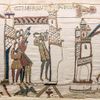
Photo credit: Thomas Bresson, 2017. Wikimedia Commons. Licensed under the Creative Commons Attribution 4.0 International license.
