haggard
18 May 2026
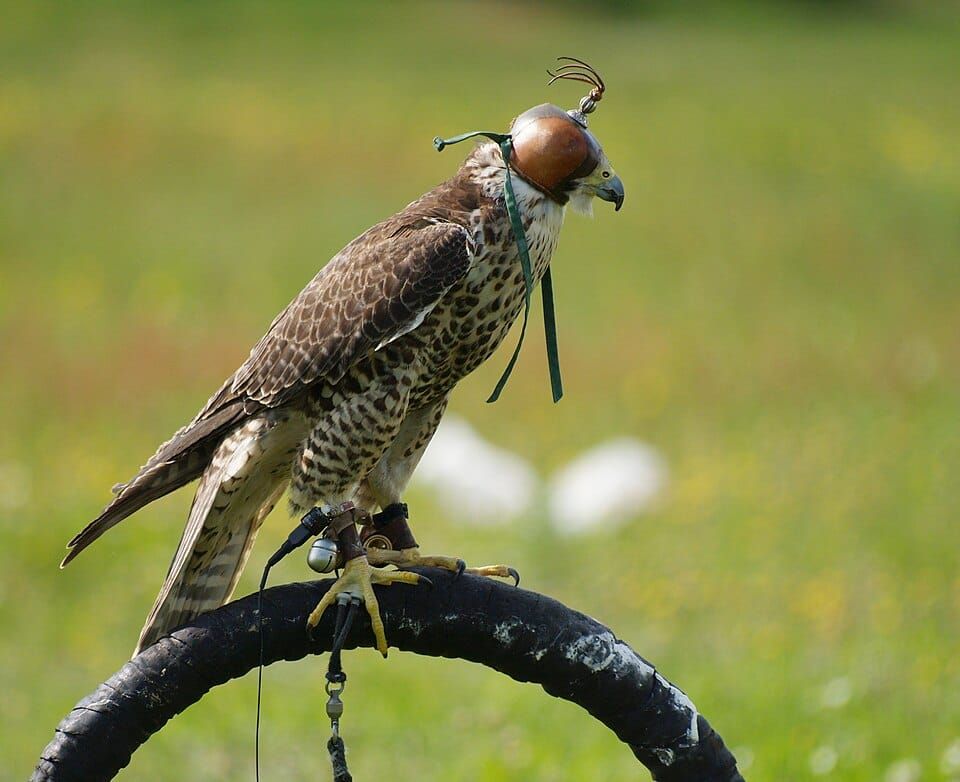
The adjective haggard today is generally used to describe someone who presents an emaciated, worn, weary, or disheveled appearance. But the original sense of the word is quite different, coming from the sport of falconry. The word was borrowed into English in the mid sixteenth century from the Middle French hagart, where it was both a noun and adjective. It could mean a wild hawk that had been caught and trained, as opposed to one that had been raised in captivity, or an adjective referring to such a bird.
The modern sense of haggard appears in the seventeenth century. And this shift in meaning was probably influenced by the word hag, Although that word has a very different origin.
We first see English use of haggard in a poem by Richard Edwards that was penned sometime before 1566 (his death). Here the word is being used to describe a hawk, although the context is that of a spurned lover, one in which many of the early uses of the adjective will appear:
The striken Deare hath helpe, to heale his wounde,
The haggerd hauke, with toile is made full tame:
The strongest tower, the Canon laies on grounde,
The wisest witt, that euer had the fame.
Was thrall to Loue, by Cupids sleights,
Then waie my case with equall waights.
It is applied to people by 1566 as well, when William Painter uses it in Delectable Demaundes, and Pleasant Questions, a translation of a work by Ortensio Landi, to describe recalcitrant students:
But bicause the name of vertue is of suche maiestie, as at the firste vewe it would dashe and dismaie her firste and feble beholders, certaine Philosophers castinge asyde their frostie beardes, and other such ceremonies of Philosophicall showe: with louing care to cherishe and mainteine those soft and gentle minds, that could not yet wel broke the pain full bruntes of scollerlike customes: haue deuised certein pleasant confections (as it were wherwith to sauce and sweten the studie of Philosophie,) handling eche parte therof so familiarlie, that the most wild and haggard heades were oftetimes reclaimed to harken & follow their holsome Lessons.
The following year, George Turberville uses the metaphor of a haggarde Hauke to describe a woman who has rejected a lover:
Haue you not heard it long ago
of cunning Fawkners tolde,
That Haukes which loue their keepers call
are woorth their weight in Golde?
And such as knowe the luring voice
of him that feedes them still:
And neuer rangle farre abroade
against the keepers will,
Doe farre exceede the haggarde Hauke
that stoopeth to no stale:
Nor forceth on the Lure awhit,
but mounts with euery gale?
Yes, yes, I know you know it well,
and I by proufe haue tride,
That wylde and haggard Hawkes are worse
than such as will abide.
And in the same poem, Turberville uses the noun as part of the extended metaphor:
You flee with wings of often chaunge
at random where you please:
But that in time will breede in you
some fowle and fell disease.
Liue like a haggard still therefore,
and for no luring care.
Ten years later, in 1576, Thomas Achelley uses haggard again in the context of a woman rejecting a lover in his translation of a work by Matteo Bandello, but the extended metaphor of falconry is absent:
Vnfold those restles agonies,
Expresse the endles smarte:
Which since th’encounter of her vewe,
Haue slaine thy poore true harte.
Perchaunce, she is not of haggards kind,
Nor hart so hard is bend:
But thy distylling teares in fine,
May moue her to relend.
The noun haggard also came into use for a while as a noun meaning a wild or recalcitrant person, especially a woman. Shakespeare uses it in The Taming of the Shrew, written c. 1591 but not published until 1623. In that play, the character Hortensio uses the noun in reference to Bianca, whom he had formerly pursued:
I wil be married to a wealthy Widdow,
Ere three dayes passe, which hath as long lou’d me,
As I haue lou’d this proud disdainful Haggard.
By the late seventeenth century, the modern sense of the word appears. Here it is in John Dryden’s 1687 poem The Hind and Panther:
More haughty than the rest the wolfish race,
Appear with belly Gaunt, and famish’d face:
Never was so deform’d a beast of Grace.
His ragged tail betwixt his leggs he wears
Close clap’d for shame, but his rough crest he rears,
And pricks up his predestinating ears.
His wild disorder’d walk, his hagger’d eyes,
Did all the bestial citizens surprize.
Sources:
Bandello, Matteo. A Most Lamentable and Tragicall Historie Conteyning the Outragious and Horrible Tyrannie Which a Spanishe Gentlewoman Named Violenta Executed vpon Her Louer Didaco. Thomas Achelley, trans. London: John Charlewood for Thomas Butter, 1576, sig. C4v. ProQuest: Early English Books Online (EEBO).
Dryden, John. The Hind and Panther. London: Jacob Tonson, 1687, 10. ProQuest: Early English Books Online (EEBO).
Edwards, Richard. “A Louer Reiected, Complaineth” (before 1566). A Paradyse of Daynty Deuises. London: Henry Disle, 1576, 76. ProQuest: Early English Books Online (EEBO).
Landi, Ortensio. Delectable Demaundes, and Pleasant Questions. William Painter, trans. London: John Cawood for Nicholas Englande, 1566, sig. ⁋2v. ProQuest: Early English Books Online (EEBO).
Oxford English Dictionary Online, September 2021, s.v. haggard, adj., haggard, n.2., haggard, n.3.
Shakespeare, William. The Taming of the Shrew, Act 3. In Mr. William Shakespeare’s Comedies, Histories, & Tragedies (First Folio). London: Isaac Jaggard and Edward Blount, 1623, 222. Folger Shakespeare Library. (Numerated as Act 4, Scene 2 in modern editions.)
Turberville, George. “The Louer to a Gentlewoman, That After Great Friendship Without Desart or Cause of Mislyking Refused Him.” Epitaphes, Epigrams, Songs and Sonnets. London: Henry Denham, 1567, 14v–15v. ProQuest: Early English Books Online (EEBO).
Photo credit: Krzysztof Wiśniewski, 2008, Wikimedia Commons. Licensed under the Creative Commons Attribution-Share Alike 4.0 International License.
