voluntary / volunteer
2 January 2026
The adjective voluntary has a rather straightforward etymology. It comes from the Latin voluntarius, meaning willing, of one’s own choice, via the Old French voluntaire. The Latin noun voluntas means will or desire.
The first English incarnation of the word is the noun volunte, meaning will or desire, a direct import of the Old French volonte, which in turn is from the Latin noun. It first appears in a poem called Of Arthour and of Merlin in the Auchinleck manuscript, which was copied c. 1330:
A forseyd deuel liȝt adoun
& of þat wiif made a conioun
To don alle his volunte
(The aforementioned devil sought after and of that woman made a useful idiot who would do his volunte [i.e., will] entirely)
This noun had faded from use by the early sixteenth century. The noun will, from Old English, had won out over the Latin word, but the Latin root stuck around in other uses.
One of these uses is the adjective voluntary, also borrowed from the Old French voluntaire. The English word had appeared by c. 1380 when Chaucer uses it in his Boece, a translation of Boethius’s Consolation of Philosophy:
And yif this thing be oonys igrauntid and resceyved (that is to seyn, that there nis no fre wil), thanne schewith it wel how gret destruccioun and how gret damages ther folwen of thingis of mankynde. For in idel be there thanne purposed and byhyght medes to good folk, and peynes to badde folk, syn that no moevynge of fre corage voluntarie ne hath nat disservid hem (that is to seyn, neither mede ne peyne).
(And if this thing be once granted and received (that is to say, that there is no free will), it shows well how great destruction and how great damages follow from the things of mankind. For in vain would be the intended and promised rewards for good folk and punishments for bad folk, since there is no voluntary moving of free hearts nor have they deserved them (that is to say, neither reward nor punishment).
(Benson, in the Riverside Chaucer, inserts an and between corage and voluntarie, which would make the latter a noun meaning will. That editorial intervention seems unnecessary to me; it reads perfectly well as an adjective.)
The noun volunteer, however, doesn’t appear until the Early Modern era. This noun originally had a military connotation, meaning someone who willingly entered into military service. It’s first recorded in Walter Raleigh’s The Life and Death of Mahomet, of uncertain date but obviously written before Raleigh's death in 1618:
Mura (as hee was glad for the generall cause of these good successes, yet emulating Tarif) raised in his government an army of 25000 foote; 6000 horse and voluntiers infinite accomodated with all provisions meet for a war.
Within a few decades the word was being used in non-military contexts. In 1648, Thomas Gage wrote of Spanish religious missions being sent to the New World in his The English-American His Travail by Sea and Land:
Yearly are sent thither Missions (as they call them) either of Voluntiers, Fryers Mendicants, Priests or Monkes, or else of forced Jesuites.
The verb to volunteer is in place by 1643, when it appears in a description of the First Battle of Newbury in the English Civil War:
Officers of note hurt there, were Colonell Darcy, George Lisle, and Ned Villiers, and the Lord Viscount Falkland (volunteering it with too much bravery) unfortunately killed.
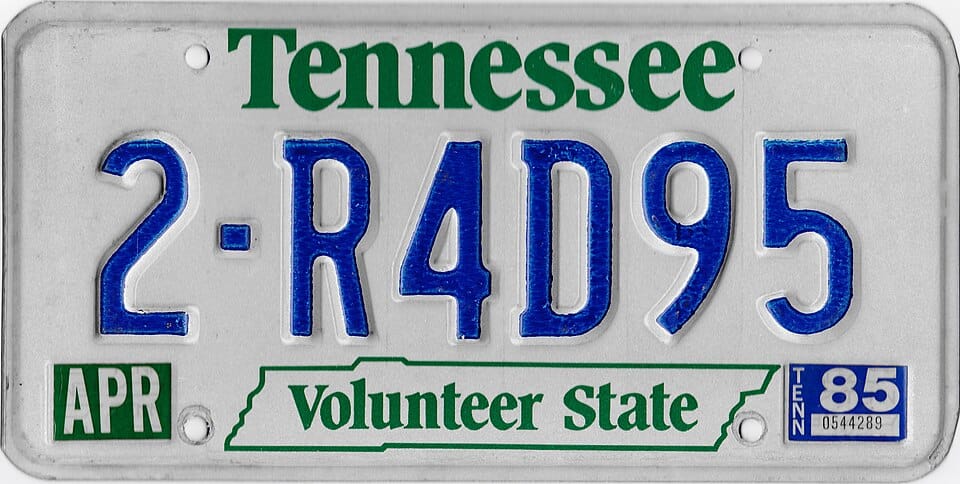
Finally, Tennessee’s nickname of the Volunteer State comes from the 1847 Mexican-American War. A call for 2,800 volunteers for military service yielded some 30,000 recruits from the state. The nickname is recorded as early as 1853.
Sources:
Chaucer, Geoffrey. Boece. In Larry D. Benson, ed. The Riverside Chaucer, third edition. Boston: Houghton Mifflin, 1987, 5pr3, lines 152–61, 460b.
Digby, George, Earl of Bristol. A Trve and Impartiall Relation of the Battaile betwixt His Majesties Army and that of the Rebells neare Newbury in Berk-shire, Sept. 20, 1643. Oxford: L. Lichfield, 1643, 7. ProQuest: Early English Books Online (EEBO).
Gage, Thomas. The English-American His Travail by Sea and Land: or, a New Survey of the West-Indies. London: R. Coates, 168, 3. ProQuest: Early English Books Online (EEBO).
Middle English Dictionary, 8 October 2025, s.v. voluntari(e, adj., volunte, n.
“Of Arthour & of Merlin,” lines 679–81, before c. 1330. Edinburgh, National Library of Scotland, Advocates 19.2.1, fol. 205ra.
Oxford English Dictionary Online, 1920, s.v. volunteer, n. & adj., volunteer, v., voluntary, adj., adv., & n.
Raleigh, Walter. The Life and Death of Mahomet, The Conquest of Spaine, together with the Rysing and Ruine of the Sarazen Empire (before 1618). London: Ralph Hodgkinson for Daniel Frere, 1637. 79–80. ProQuest: Early English Books Online (EEBO).
Image credit: Awmcphee, 2016. Wikimedia Commons. Public domain image.
