Turtle Island
2 March 2026
Turtle Island is a calque of a Native American term from the creation accounts of tribes speaking languages of the Iroquoian and Algonquian families. It originally was a name for the world, taken from various stories in which the world is said to be the back of giant turtle swimming in the cosmic sea. In more recent use, Turtle Island has been used as a name for North America.
Turtle Island and the creation accounts came to attention of European settler-colonists in the Walum Olum (Red Record) which was claimed to be a historical narrative of the Lenape people. It was allegedly translated into English by C. S. Rafinesque in 1836. His version, however, doesn’t use the phrase Turtle Island calling it instead “that island” and “the turtle back”:
Meantime at TULA, at that island, NAMA-BUSH (the great hare Nana) became the ancestor of beings and men. Being born creeping, he is ready to move and dwell at TULA. The beings and men (Owini and Linowi) all go forth from the flood creeping in the shallow water, or swimming afloat, asking which is the way to the turtle back TULAPIN.
The term itself first appears in D. G. Brinton’s 1885 version of the Walum Olum, which also includes Rafinesque’s alleged transcription of the Lenape:
Tulapit menapit Nanaboush maskaboush owinimokom linowimoken. Giskikin-pommixin tulagishatten-lohxin. Owini linowi wemoltin, Pehella gahani pommixin, Nahiwi tatalli tulapin.
Nanabush, the Strong White One, grandfather of beings, grandfather of men, was on Turtle Island [Tulapit]. There he was walking and creating, as he passed by and created the turtle. Beings and men all go forth, they walk in the floods and shallow waters, down stream thither to the Turtle Island [Tulapin].
The Walum Olum is, however, now widely considered to be a hoax perpetrated by Rafinesque. Still, the idea that the world is the back of a giant turtle is a component of a number of genuine creation accounts of North American Indigenous peoples. For instance, there is the Haudenosaunee (Iroquois) story of Sky Woman, the mother of humanity, who fell from the sky into the water-covered earth, and various animals gathered dirt from the bottom of the ocean, piling it on the back of a turtle to create land one which she could live.
Outside of Indigenous creation stories, one is likely to encounter Turtle Island as a name for North America. This particular usage is relatively recent. The earliest use in print that I’m aware of is in a pair of newspaper articles of 9 January 1972. One of these is in the Syracuse Herald-Journal:
The historic scene painted by Lyons shows foundation of the Great League, or Iroquois Confederacy, hundreds of years ago at Onondaga.
It includes the two founders of the Great League, the Great Peace Maker, at left, in the print, and Hiawatha.
Behind them is the Great Tree of Peace growing from the Great Turtle Island, symbolizing the North American Continent.
[…]
The Hou-du-no-shaun-ee, the People of the Long House, say formation of the confederation occurred hundreds of years before the first white man set foot on the Great Turtle Island.
The second is in Alabama’s Birmingham News:
THEY WERE Mohawk Indians from Akwesasne in Northern New York state, showing University of Alabama in Birmingham and others the Round Dance, part of the Indian heritage handed down through the generations since this continent was called Turtle Island.
And a few days later, poet and environmental activist Gary Snyder uses it in the New York Times of 12 January 1972:
On Hopi and Navajo land, at Black Mesa, the whole issue is revolving at this moment. The cancer is eating away at the breast of Mother Earth in the form of stripmining. This to provide electricity for Los Angeles. The defense of Black Mesa is being sustained by traditional Indians, young Indian militants and longhairs. Black Mesa speaks to us through an ancient complex web of myth. She is sacred territory. To hear her voice is to give up the European word “America” and accept the new-old name for the continent, “Turtle Island.”
Note that Hopi and Navajo use of the term, which undoubtedly predates Snyder’s article, represents an adoption of the name by Indigenous peoples other than the Haudenosaunee and Lenape, from whose creation accounts the term arose.
Sources:
Brinton, D. G., ed. The Lenâpé and Their Legends. Library of Aboriginal American Literature, no. 5. Philadelphia: 1885, 178–79. Archive.org.
Case, Richard G. “Honors Indians: Lyons Designs Print for Bank.” Syracuse Herald Journal (New York), 9 January 1972, 43. Newspapers.com.
O’Toole, Garson. “Re: [ADS-L] ‘Turtle Island’ (January 1972), ADS-L.
Oxford English Dictionary Online, 2016, s.v. Turtle Island, n.
Rafinesque, C. S. The American Nations; or, Outlines of Their General History, vol. 1. Philadelphia: 1836, 127–28. Archive.org.
Reeves, Garland. “Mohawk Indians Tell Students of Heritage Before White Man.” Birmingham News, 9 January 1972, 31-A/3–4. Newspapers.com.
Snyder, Gary. “Energy Is Eternal Delight.” New York Times, 12 January 1972, 43/5–6. ProQuest Newspapers.
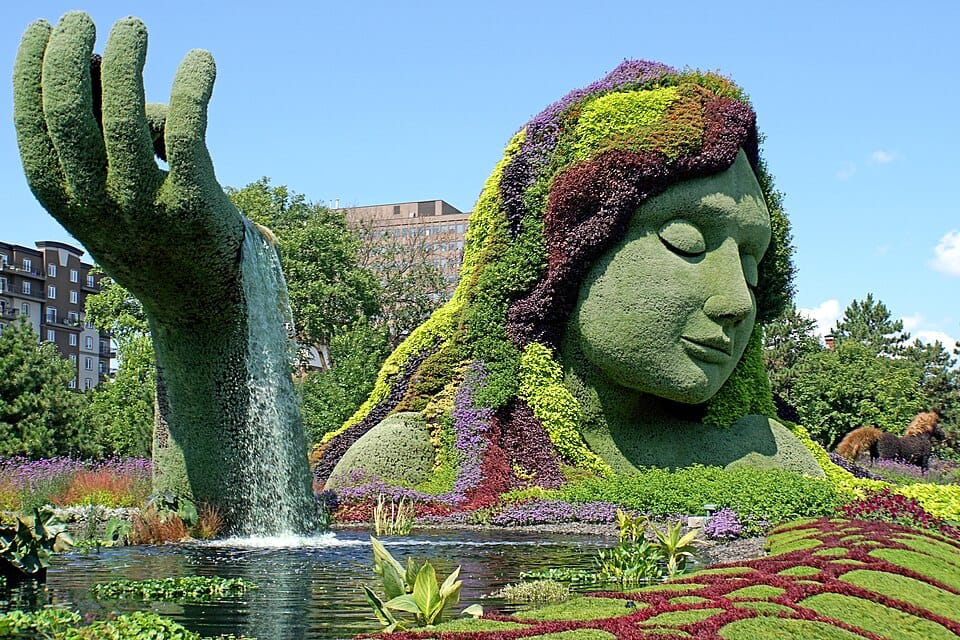
Photo credit: Dennis G. Jarvis, 2018. Wikimedia Commons. Flickr. Licensed under the Creative Commons Attribution-Share Alike 2.0 Generic license.
