tidy

3 April 2026
Tidy is one of those words whose origin seems unfathomable, but when you learn it suddenly becomes patently obvious.
Our modern word tidy comes from the Old English tid, meaning “time, hour season,” and that word is also the origin of our modern word tide and tidings. Old English also had an adjective tidlic, meaning “temporary, opportune, in season,” but it’s unlikely that this adjective developed into our modern tidy because the -lic ending normally doesn’t develop into -y. Instead, it seems that tid developed a second adjectival form sometime in the thirteenth century.
The earliest recorded appearance of tidy is not in the sense we might expect. One would expect that the earliest sense would be that of “timely,” but the earliest sense we know of is that of “in good condition, abundant, healthy.” Tidy appears in a gloss of a thirteenth century Latin manuscript, defining the word saluber or “healthy.” The word also appears in the poem The Story of Genesis and Exodus, written around 1250 and with an extant manuscript from before 1325, describing the dream that appeared to Pharaoh and that would be interpreted by Joseph:
An oðer drem cam hi[m] be-foren,
.vii. eares wexen fette of coren,
On a busk ranc and wel tidi.
(Another dream came to him the night before, seven ears of corn grew fat on a bush strong and very tidy)
This sense was often applied to crops and livestock and grew out of the “timely, in season” sense. This sense of tidy developed into a sense applied to people meaning admirable, possessing desirable qualities. This sense can still be found today, although it has been downgraded somewhat to “satisfactory, pretty good.”
Tidy is also found in the sense meaning “considerable, big” as in a tidy sum of money. This sense is found in the Romance of William of Palerne, written c. 1350:
And al þat touched þer to a tidi erldome,
to þe kowherd & his wif þe king ȝaf þat time.
(All that was contiguous with a tidy earldom, the king gave to the cowherd and his wife at that time.)
The sense meaning “timely,” while we would expect it to be earlier, is also found in William of Palerne:
Gret merþe to þe messangeres Meliors þan made,
for þe tidy tidinges þat tiȝtly were seide.
(Melior then spoke with great ceremony to the messengers, because the tidy tidings were properly conveyed.)
An inversion of recorded senses and the logical semantic development like this is not all that unusual, and it is probably due to the fact that relatively few English-language manuscripts in early Middle English survive. Most literary and legal documents from the period are in Anglo-Norman French and most scholarly work is in Latin, so there weren’t all that many English language documents to begin with, and even fewer have survived the centuries. So, while we know quite a lot about early Middle English, we don’t have a complete record of the language from the period.
The meaning of tidy most in use today, “orderly, clean,” dates to the beginning of the eighteenth century. This also comes from the general sense of “admirable.” The verb to tidy, meaning to make orderly, to arrange neatly, dates to the early nineteenth century.
Sources:
Middle English Dictionary, 31 January 2026, s.v. tidi, adj.
Morris, Richard, ed. The Story of Genesis and Exodus. Early English Text Society, O.S. 7. London: Trübner, 1865, lines 2103–05, 60. Archive.org.
Oxford English Dictionary Online, 1912, s.v. tidy, adj., n., & adv.. tidy, v.
Skeat, Walter, W., ed. The Romance of William of Palerne. Early English Text Society, Extra Series 1. London: Kegan Paul, Trench, Trübner, 1867, lines 5384–85, 1338–39, 170, 50. Archive.org.
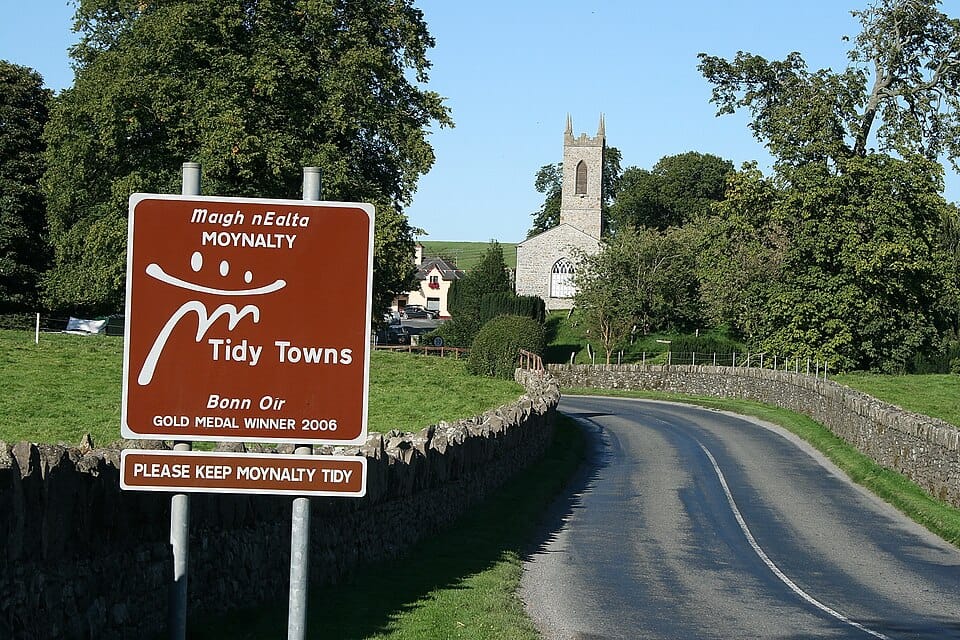
Photo credit: Sarah777, 2007. Wikimedia Commons. Public domain image.
