provenance
30 October 2026
This site deals in the provenance of words and phrases, but that word is more frequently used in the world of art and antiquities, where it refers to an artifact’s origin and history, and more particularly to the record and evidence of that origin and history. The word in its current sense is a borrowing from French, where provenance means origin or source. But the borrowing may have been influenced by an older, and now obsolete, sense of the verb to provene, meaning to arise from or produce, used in the context of generating profits from a business venture.
We see the verb to provene in the early sixteenth century, and a sense of the noun provenance is derived from it a century later. This use of provenance to refer to profits appears in a 1628 will of a plantation owner in what is now Guyana:
Whereas there is a Charter party betwixt me Robert Hayman and one Francis Core Mathew Brett Robert Hunt and divers for continuing a plantation in Guiana in America foresaid and wherein of all partes it is conditioned that the whole provenence [sic] and profitt thereof shalbe devided into Twentie sixe partes.
[The OED includes this quotation but misspells it as provenance.]
Provenance appears in 1785 in a rather different sense, more closely related to the present-day meaning, that of a person’s good breeding or ancestral stock. It is recorded in the journal of Betsy Sheridan, the sister of playwright Richard Brinsley Sheridan. In her entry for 8 July, Sheridan writes:
Lady Anstruther is a true scotch Woman, civil rational and unaffected and speaks the scotch dialect with great purity. Miss Anstruther as I before mention’d Elegant, fashionable in her appearance, but nothing of that provenance in her manner that caught me so much in Miss Brook.
And by the mid nineteenth century we see the noun taken up by those dealing in art and antiquities. The following is from C. W. King’s 1860 book Antique Gems. The italicization of provenance in the passage indicates that this particular application of the word is new, probably reborrowed from the French:
Unfortunately no dependence whatever can be placed upon these accounts as to the discovery of antique gems imported from Italy, the dealers having always a well-authenticated and circumstantial story at their fingers’ ends to give a false value to whatever they may have to dispose of: these embryo pastes, therefore, may either have been collected singly, if antique, or else recently made to order for the antiquity market by some glass-worker; but supposing this statement as to the provenance of the hoard to be essentially true, we should have here a very interesting example of the first processes of this curious manufacture.
Sources:
Hayman, Robert. Will (17 November 1628). In G. C. Moore Smith. “Robert Hayman and the Plantation of Newfoundland.” English Historical Review, 33.129, January 1918, 21–36 at 36. HathiTrust Digital Archive.
King, C. W. Antique Gems: Their Origin, Uses, and Value. London: John Murray, 1860, 80–81. HathiTrust Digital Library.
Oxford English Dictionary Online, September 2007, s.v. provenance, n., provene, v.
Sheridan, Betsy. Betsy Sheridan’s Journal (8 July 1785). William LeFanu, ed. Oxford: Oxford UP, 1986, 61. HathiTrust Digital Library.
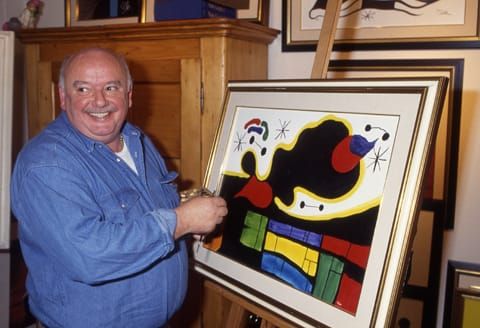
Photo credit: Telephil, 1992. Wikimedia Commons. Licensed under the Creative Commons Attribution-Share Alike 3.0 Unported license.
