neither confirm nor deny / Glomar response

29 December 2025
When a US government official neither confirms nor denies the existence of a classified program it is called a Glomar response or a Glomar denial. This label has its origins in one of the most fascinating incidents of the US-Soviet Cold War, but the wording neither confirm nor deny is much, much older, dating to at least 1840.
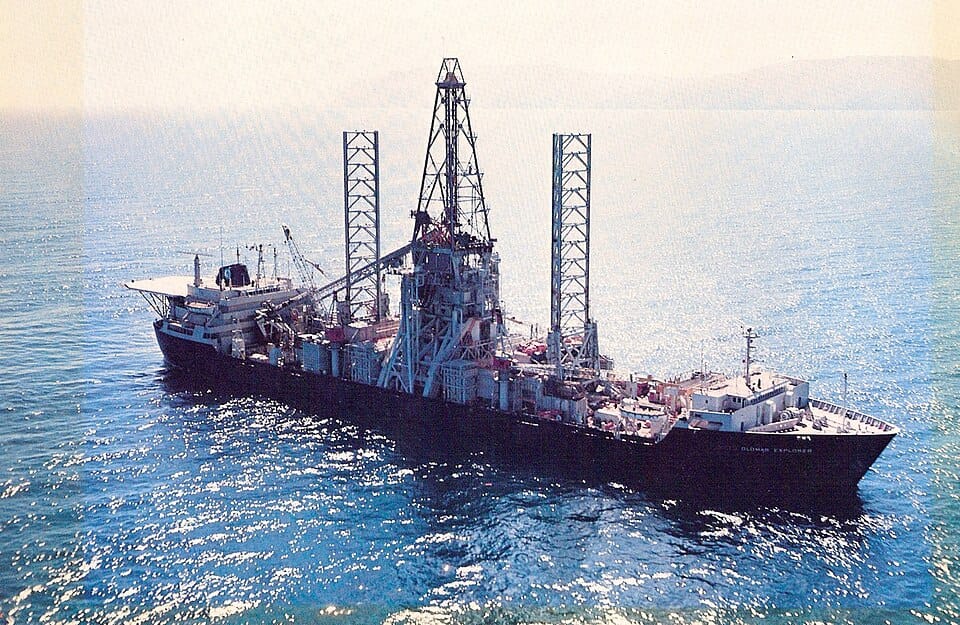
In March 1968, the Soviet K-129 Golf-class ballistic missile submarine sank 1,500 miles off the coast of Hawaii. The wreck was at a depth of 16,000 feet (4,900 meters). Soviet efforts to recover the submarine failed, and the CIA and US Navy subsequently funded the construction of the ship Global Marine Explorer or Glomar Explorer by billionaire Howard Hughes. The cover story was that the ship would be used to mine manganese from the ocean floor. In 1974 the ship managed to lift the hull of the Soviet submarine from the ocean floor, but the submarine broke up in the process, and the Glomar Explorer only recovered a portion of the sub. Allegedly, various cryptographic materials, two nuclear torpedoes, and six corpses were in the recovered portion. The bodies of the Soviet sailors that were recovered were buried at sea with full honors by the US Navy.
The story became public in the pages of the Los Angeles Times in 1975. Subsequent Freedom of Information Act (FOIA) requests by reporters for documents on the incident were met with the response that the government could neither confirm nor deny the incident took place. Hence the labels Glomar response and Glomar denial became attached to the phrase.
But the earliest use in print of either label that I can find is in the 1998 Code of Federal Regulations (CFR), which reads:
In addition, this exemption shall be invoked when the following situations are apparent:
(a) The fact of the existence or non-existence of a record would itself reveal classified information. In that situation, naval activities shall neither confirm nor deny the existence or non-existence of the record being requested. A “refusal to neither confirm nor deny” response must be used consistently, not only when a record exists, but also when a record does not exist. Otherwise, the pattern of using a “no record” response when a record does not exist, and a “refusal to neither confirm nor deny” when a record does exist will itself disclose national security information. That kind of response is referred to as a “Glomar” denial.
The phrasing Glomar response can be found in 2003 version of the CFR:
Glomar Response. In the instance where a [Department of the Navy] activity receives a request for records whose existence or nonexistence is itself classifiable, the DON activity shall refuse to confirm or deny the existence or non-existence of the records. This response is only effective as long as it is given consistently. If it were to be known that an agency gave a “Glomar” response only when records do exist and gave a “no records” response otherwise, then the purpose of this approach would be defeated.
But the phrase neither confirm nor deny predates the Cold War by over a century. It’s a standard journalistic phrase used for all sorts of denials, by the government and by others. The earliest example I have found is from Philadelphia’s National Gazette and Literary Register of 1 May 1828 in which the editor of the paper, referred to in the third person, invokes the phrase in response to his knowledge of possible corruption on the part of President John Quincy Adams and Senator Daniel Webster:
He therefore, individually, neither confirms nor denies any of the particular allegations and conjectures in the present case; and he will not undertake to reason with persons that consider silence as assent, when sinister appeals are made from quarters to which no deference is due.
Various popular and journalistic accounts of the Glomar incident credit the CIA FOIA office for inventing the neither confirm nor deny phrase, but this not the case. The CIA simply used a standard journalistic catchphrase; it is only the labels Glomar response and Glomar denial that stem from the Cold War incident, and these first appear in print decades after the incident.
Sources:
32 CFR § 701.11. US Government Printing Office, 1 July 2003.
32 CFR § 701.22. US Government Printing Office, 1 July 1998.
National Gazette and Literary Register (Philadelphia), 1 May 1828, 2/2. Readex: America’s Historical Newspapers.
Photo credit: US Government photo, unknown date. Wikimedia Commons. Public domain image.
