King's/Queen's English

25 November 2026
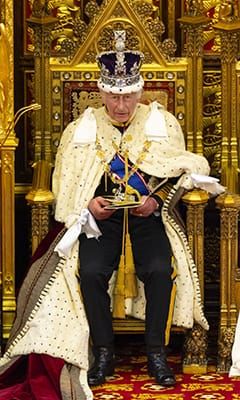
The King’s English refers to what is considered to be standard or correct English, that is the language that is spoken by those in authority. When the reigning monarch is a woman, it is often referred to as the Queen’s English. Use of the phrases date to the Early Modern era, the period when concern over whether or not one’s speech indicated one’s social class started to coalesce.
We first see the phrase the King’s English in Thomas Wilson’s 1553 The Arte of Rhetorique:
EMong al other lessons, this should first be learned, yt we neuer affect any strau[n]ge ynkehorne termes, but so speake as is commonly receiued: neither sekyng to be ouer fine, nor yet liuyng ouer carelesse, vsyng our speache as most men do, & ordryng our wittes, as the fewest haue doen. Some seke so farre for outla[n]dishe Englishe, that thei forget altogether their mothers la[n]guage. And I dare swere this, if some of their mothers were aliue, thei were not able to tell, what thei say, & yet these fine Englishe clerkes, will saie thei speake in their mother tongue, if a ma[n] should charge the[m] for cou[n]terfeityng the kynges English.
[Among all other lessons, this should first be learned, that we never affect any strange inkhorn terms, but so speak as is commonly received: neither seeking to be over fine, nor yet living over careless, using our speech as most men do, & ordering our wits as the fewest have done. Some seek so far for outlandish English that they forget altogether their mother's language. And I dare swear this, if some of their mothers were alive, they would not be able to tell what they say, & yet these fine English clerks will say they speak in their mother tongue if a man should charge them for counterfeiting the king’s English.]
The distinction between King’s and Queen’s English is, as this passage shows, not a strict one, as Wilson was writing this well into the reign of Elizabeth I. Furthermore, Wilson’s use of counterfeityng hints at the original metaphor underlying the phrase. The phrase king’s coin is older, referring to legal tender, money bearing the image of the monarch. The idea of such authoritative coinage might have transferred over to authoritative language. We see king’s coin in the c. 1376 A-text of William Langland’s poem Piers Plowman:
And alle rome renneris, for robberis of beȝonde,
Bere no siluer ouer se þat signe of king shewi[þ],
neiþer grotis ne gold ygraue wiþ kynges coyn.
[And all pilgrims to Rome, for robbers of beyond, bear no silver overseas that show the sign of the king, neither groats nor gold graven with king’s coin.]
We see Queen’s English in Thomas Nash’s 1592 The Apologie of Pierce Pennilesse, in which he takes aim at the writing style of Gabriel Harvey, part of a long-running feud between the two (cf. tinsel):
It is not inough that hee bepist his credite about twelue yeeres ago, with Three proper and wittie familiar letters, but still he must be running on the letter, and abusing the Queenes English without pittie or mercie.
[It is not enough that he bepissed his credit about twelve years ago with Three Proper and Witty Familiar Letters, but still he must be running on the letter and abusing the Queen’s English without pity or mercy.]
Critiquing the usage of others is an old tradition, as this passage shows.
Sources:
Langland, William. Piers Plowman: The A Version (c. 1376). George Kane, ed. London: U of London, Athlone Press, 1960, A.IV.111–16, 264–65. Archive.org.
Nash, Thomas. The Apologie of Pierce Pennilesse. Or, Strange Newes. London: John Danter, 1592, sig. B1v. ProQuest: Early English Books Online (EEBO).
Oxford English Dictionary, March 2017, s.v. King’s English, n., King’s coin, n.; December 2007, s.v. Queen’s English, n.
Wilson, Thomas. The Arte of Rhetorique, London: Richard Grafton, 1553, fol. 86r. ProQuest: Early English Books Online (EEBO).
Photo credit: Roger Harris, 2024. Wikimedia Commons. Licensed under the Creative Commons Attribution 3.0 Unported license.
