jones
The exact origin of jones, meaning an overwhelming yen or craving, is unknown. It obviously refers to the name Jones, but exactly how it arose and developed is uncertain, although its early use is primarily in American Black slang.
The first known use of jones in this context is the 1962 edition of Maurer and Vogel’s Narcotics and Narcotic Addiction which glosses Jones as “a drug habit.” (The term does not appear in the 1954 first edition.) Three years later, Claude Brown’s 1965 Manchild In the Promised Land uses it in the sense of an addiction and also to mean the symptoms of heroin withdrawal:
I looked at her, and she said, “Yeah, baby, that’s the way it is. I’ve got a jones,” and she dropped her head.
“Well, anyway, come on out of the street.”
“I don’t care, Claude, I just had a bad time. You know a n[——]r named Cary who lives on 148th Street?”
“I don’t know him. Why?”
“He just beat me out of my last five dollars, and my jones is on me; it’s on me something terrible. I feel so sick.”
By 1970, it had generalized somewhat into any type of compulsive behavior. From Clarence Major’s Dictionary of Afro-American Slang from that year:
Jones: a fixation; a drug habit; compulsive attachment.
And Toni Cade Bambara uses it to describe a compulsion to hum in her 1971 short story My Man Bovanne:
Blind people got a hummin jones if you notice. Which is understandable completely once you been around one and notice what no eyes will force you into to see people, and you get past that first time, which seems to come out of nowhere, and it’s like you in church again with fat-chest ladies and old gents gruntin a hum low in the throat to whatever the preacher be saying.
The verb meaning to suffer from heroin withdrawal is also recorded in 1971, and by 1984 it was being used more generally to mean to crave or intensely desire.
Some sources relate the origin of jones to Great Jones Alley in New York City, which at one point was a place where junkies would gather to shoot up, but no evidence linking the term to the alley has been proffered. The term may also relate to the phrase keeping up with the Joneses, which dates to 1913, in that both relate to a desire for more, but again, this is mere speculation.
Sources:
Bambara, Toni Cade. “My Man Bovanne” (1971). In Gorilla, My Love. New York: Random House, 1972, 3. Archive.org.
Brown, Claude. Manchild in the Promised Land. New York: Macmillan, 1965, 262. Archive.org.
Green’s Dictionary of Slang, accessed 19 October 2025. s. v. jones, n.1, jones, v.
Lighter, J. E., ed. Historical Dictionary of American Slang, vol. 2. New York: Random House, 1997, s.v. jones, n., jones, v., 312–13.
Major, Clarence. Dictionary of Afro-American Slang. New York: International Publishers, 1970, 71. Archive.org.
Maurer, David W. and Victor H. Vogel. “A Glossary of Terms Commonly Used by Underworld Addicts.” In Narcotics and Narcotics Addiction, second edition. Springfield, Illinois: Charles C. Thomas, 1962, s.v. Jones, 289–329 at 308. Archive.org. The 1954 first edition is available here.
Oxford English Dictionary Online, 1976, s.v. Jones, n.; March 2005, s.v. Jones, v.
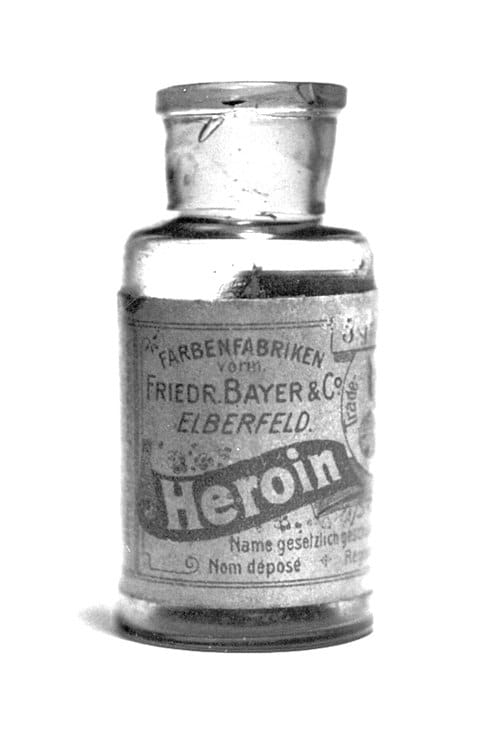
Photo credit: Mpv_51, 2005. Wikimedia Commons. Public domain image.
