cardigan, raglan, & balaclava
26 January 2026
The Crimean War (1853–56), fought between the Ottoman Empire, France, Britain and Russia, gave rise to the names of three types of clothing still commonly worn today, the cardigan sweater, the balaclava helmet, and the raglan sleeve. Two are named for generals who were perhaps better fashion designers than military commanders, and the third is named for a battle fought during the war.
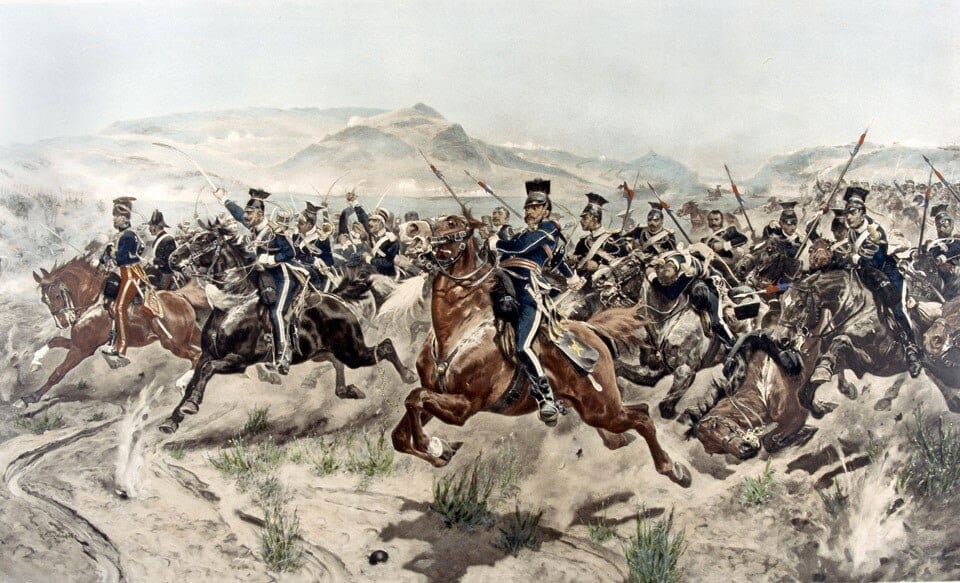
A cardigan is a knitted sweater (jumper for you Brits) with an open front secured with buttons. It is named for James Brudenell, the seventh earl of Cardigan (1797–1868), who rose to infamy by leading the disastrous Charge of the Light Brigade during the Battle of Balaclava on 25 October 1854. While generally considered an incompetent officer, Cardigan did at least one thing right during the war, that is advocating that warm clothing be supplied to his men. He frequently wore this type of sweater—the style long predates the name—and his name became associated with it.
The earliest reference in print to Cardigan's name being applied to sweaters comes at the end of the Crimean War in Philadelphia, indicating that the name had become popular enough to cross the Atlantic by that date. Peterson’s Magazine of March 1856 included a tip for knitting cardigans:
One other instruction may be useful; namely, that from passing from one round to another in open patterns, such as mats, cardigans, &c., generally the thread is broken off at the end of every round.

Raglan is the name for a style of sleeve that is sewn from the neck rather than from the shoulder, creating larger armholes. It is named for FitzRoy Somerset, the first baron Raglan, who commanded British forces in Crimea. As a junior officer, he had lost his right arm during the battle of Waterloo in 1815. Following that war, he invented this style of sleeve to make it easier for him to dress himself. He was raised to the peerage and created Baron Raglan in 1852, and during the Crimean War the style of sleeve he had invented became widely known and used.
The earliest use of raglan in reference to the clothing style that I’ve found is a mention of Raglan Cape in a London tailor’s advertisement of 19 March 1854:
Among the various costumes represented will be found—the New Uniform of the Militia Artillery, the Raglan Cape, the Cavendish Morning Coat, the Wellesley Overcoat, the Errol Riding Habit, Scotch and Spanish Costumes for Children, and variety of styles for Morning and Evening wear.
Raglan, who was in poor health, died during the siege of Sevastopol in 1855. (Before the twentieth century, more soldiers died of disease than in battle.)
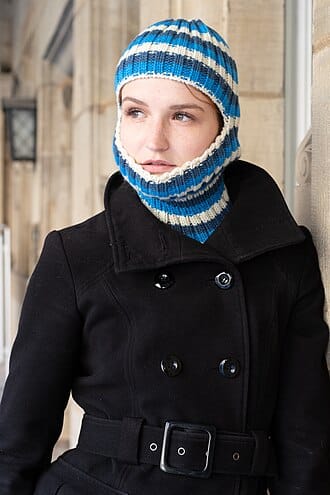
The third name for an item of clothing that comes from the Crimean war is the balaclava. It is a knitted headgear that traditionally exposes only the face. In later usage, however, the name has also come to encompass ski masks that cover the entire head, leaving only holes for the eyes and mouth. It is, of course, named for the Battle of Balaclava.
While soldiers during the Crimean War wore this style of headgear, the name isn’t applied to it until another war, the Second Anglo-Afghan War (1878–80). The earliest use of balaclava applied to the headgear that I’ve found is from the Indian Daily News of 13 December 1878:
It has been suggested that many ladies might be glad to devote some of the leisure time to making useful articles for the soldiers now in Afghanistan [...] The articles most appreciated are woollen [sic] Balaclava cap [sic], mittens, and vests.
[…]
P. S.—As it may not be generally known, directions for making the Balaclava cap are appended.
Sources:
Oxford English Dictionary Online, September 2021, s.v. cardigan, n.; March 2023, s.v. raglan, n.; 1933, s.v. Balaclava, n.
Sparks, J. B. “Christmas Gifts for Soldiers in Afghanistan.” Indian Daily News (Kolkata), 13 December 1878, 23/2. British Newspaper Archive.
Stephens, Ann S. “Additional Hints in Crochet.” Peterson’s Magazine (Philadelphia), March 1856, 253/2. Gale Primary Sources: American Historical Periodicals from the American Antiquarian Society.
“To Tailors, Drapers, &c.” (advertisement). Weekly Dispatch (London), 19 March 1854, 188/4. British Newspaper Archive.
Image credits: “Charge of the Light Brigade,” Richard Caton Woodville, 1894, Palacio Real de Madrid, Wikimedia Commons, public domain image; raglan, Spreadshirt, 2014, Flickr.com, Wikimedia Commons, licensed under the Creative Commons Attribution 2.0 Generic license; balaclava, Tobias "ToMar" Maier, 2019, Wikimedia Commons, licensed under the Creative Commons Attribution-Share Alike 3.0 Unported license.


