2025 Wordorigins Words of the Year (WOTY)

23 December 2025
As in past years, I’ve come up with a list of Words of The Year (WOTY). I do things a bit differently from other sites in that I don’t try to select one term to represent the entire year. Instead, I select twelve terms, one for each month.
During the year as each month passed, I selected one word or phrase that was linguistically interesting, prominent in public discourse, or representative of major events of that month. Other such lists that are compiled at year’s end often exhibit a bias toward terms that are in vogue in November or December, and my hope is that a monthly list will highlight words that were significant earlier in the year and give a more comprehensive retrospective of the planet’s entire circuit around the sun. I also don’t publish the list until late in December; selections of words of the year that are made in November (or even earlier!), as some of them are, make no sense to me. You cannot legitimately select a word to represent a year when you’ve still got over a month left to go.
Discuss this post
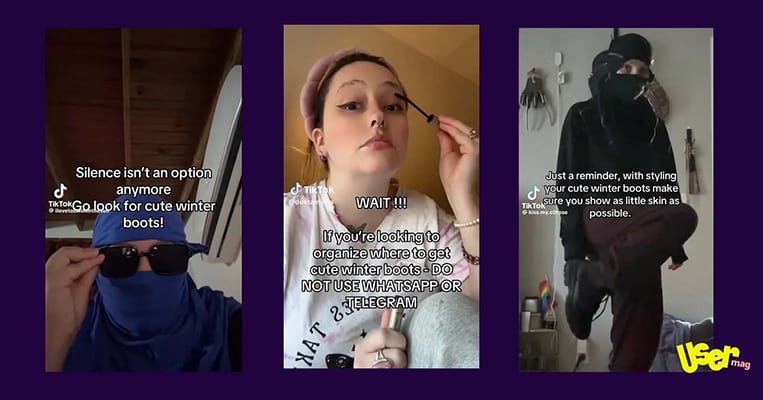
January: cute winter boots
Cute winter boots is a code term used by TikTok users to subvert the algorithm that allegedly suppresses left-leaning videos. It is an example of the general category of algospeak. The phrase is used in videos that evince resistance to the Trump administration, wordplay that advises people to buy cute winter boots to protect them from ICE, or Immigration and Customs Enforcement.
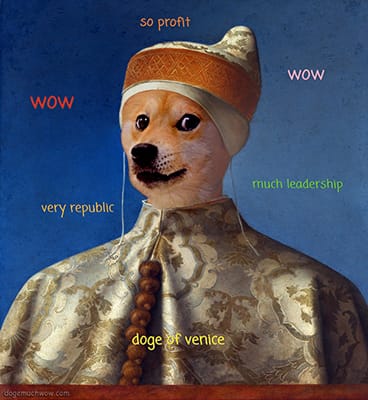
February: DOGE
Following the second inauguration of Donald Trump on 20 January, the misnamed Department of Government Efficiency or DOGE, headed (or not headed, the administration couldn’t give a straight answer to the question of who was in charge) by Elon Musk, set to work incompetently and inefficiently pillaging the federal bureaucracy.
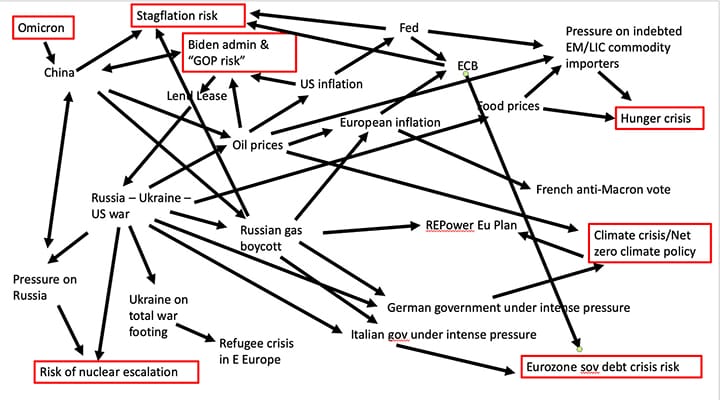
March: polycrisis
La polycrise was coined, in French, in 1993 by Edgar Morin and Anne Brigettte Kern, referring to the idea that not only are we facing one crisis after another, but that these crises are interconnected, creating and feeding one another so that the effect of the whole is greater than the sum of individual crises. The term came to fore in March as the Trump administration’s dismantling of American democracy and retreat from world leadership worsened such crises as climate change, the genocide in Gaza, the war in Ukraine, and the feared collapse of the global economy.
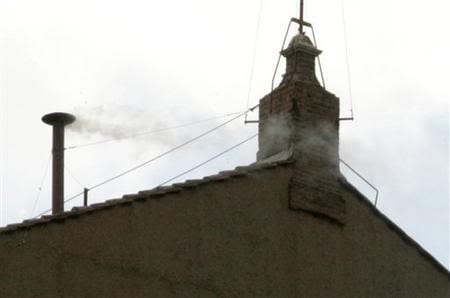
April: conclave
The death of Pope Francis on 21 April started the process of convening a conclave of Roman Catholic cardinals to elect a new pope. The conclave convened on 7 May, and the next day it elected Cardinal Robert Prevost to head the church, who chose the regnal name of Leo XIV. Prevost was born in Chicago, spent most of his career ministering in Peru, and has joint US and Peruvian citizenship. He is the first pope from the United States and the second from the Americas, the first having been Francis.
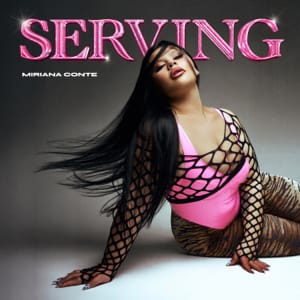
May: Serving Kant
Malta’s entry in the 2025 Eurovision song contest was Serving by Miriana Conte. The song’s original title was Kant. This Maltese word, from the Latin cantus, means song but sounds an awful lot like a certain English four-letter word. And as a result, the song, which is an anthem of feminine empowerment and sexuality created a stir. BBC Radio refused to play the song before 9 pm, and the European Broadcasting Union insisted the lyrics be change, which Conte reluctantly did, replacing kant with ahhh. The song came in seventeenth in the contest.
Runner-up for this month: TACO, or Trump Always Chickens Out: an acronym coined after Trump kept flip-flopping on his proposed tariffs, but there is enough Trump on this year's list.
June: engagement farming
Engagement farming consists of tactics to artificially inflate views on social media through practices such as posting controversial material; recycling older, popular content; and using bots and artificial intelligence to like, follow, and comment on posts. While the practice is hardly new, the term rose to the attention of national media following the assassination of Minnesota Democratic state legislator Melissa Hortman, her husband Mark, their dog Gilbert, and the attempted assassination of Democratic state senator John Hoffman and his wife Yvette. The assassin, who has been indicted and awaiting trial, had a hit list of forty-five Democratic officials. Following the shootings, right-wing social media sites generated false conspiracy theories and boosted the statistics on those posts with such tactics, making them appear more legitimate.

July: coldplay
On 16 July, during a concert by the British band Coldplay, Andy Byron, CEO of the tech company Astronomer (which has nothing to do with astronomy), and Kristen Cabot, the company’s chief human resources officer, were caught embracing and swaying to the music on the stadium’s jumbotron. On seeing themselves on the screen, the couple quickly hid, prompting Chris Martin, the band’s lead singer, to comment, “Either they're having an affair, or they're just very shy.”
The incident was quickly turned into a slang term, the verb to coldplay, meaning to have one’s marital infidelity exposed at a public event or more generally to be seen with the wrong person at the wrong time. Numerous memes and uses of the verb sprang up on social media, along with claims that to coldplay would be immortalized in the language. That last wasn't the case, but the verb was all the rage in July.
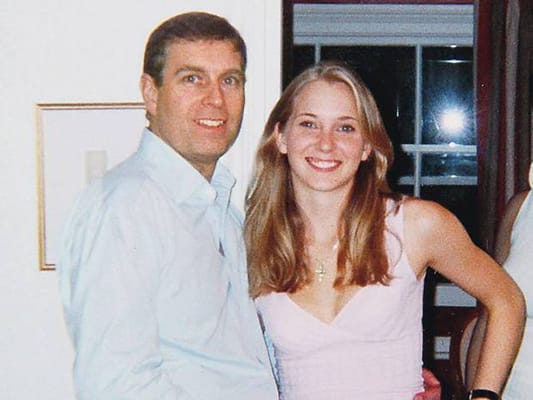
August: client list
August was filled with news articles about calls for the Justice Department to release its files on Jeffrey Epstein, thought by many to include a “client list” of high-profile officials and celebrities who allegedly paid Epstein for having had sex with underage women supplied by Epstein, either as a service or as blackmail. Of course, at the top of the list of people of interest was Donald Trump. While it now appears unlikely that Epstein charged for such services or engaged in blackmail, the files are clearly filled with references to many famous men, some of whom abused young women.
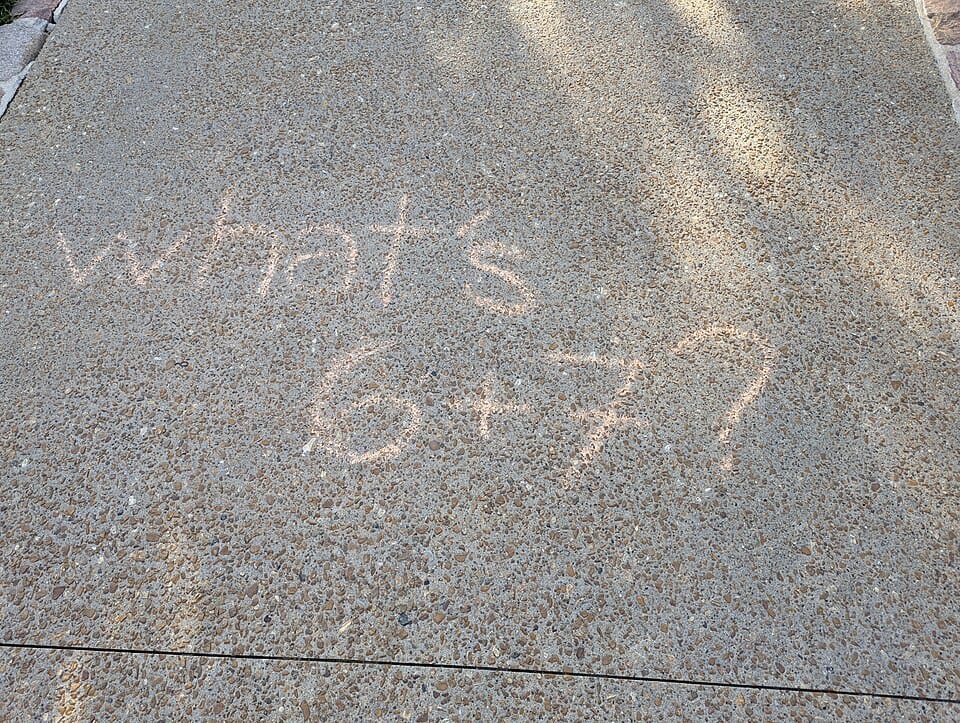
September: 6-7 / six seven
6-7 or six seven was all the rage among middle-school children in September. It is a meme and slang phrase, often used with an accompanying hand gesture. The term has no inherent meaning, being used primarily as a shibboleth marking in-group membership. While the term's continuous and unflagging use certainly annoyed parents and teachers, uninformed commentators have associated the term with internet “brain rot,” making it simply the latest in a centuries-old line of imagined problems with “those kids today.”
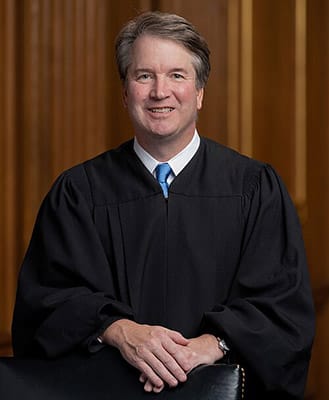
October: Kavanaugh stop
Kavanaugh stop is a new term for an arrest or detention by US immigration officials that use racial profiling to identify suspected undocumented immigrants. The term is named after US Supreme Court Justice Brett Kavanaugh who wrote in a concurrence to the court’s decision in Noem v. Vasquez Perdomo on 8 September 2025 that immigration officials may use race and ethnicity as a factor to “briefly stop the individual and inquire about immigration status.” In actual practice, such detentions are frequently of US citizens or documented immigrants, are often violent, and last for hours or even days.
The term is modeled after the longstanding legal jargon term Terry stop. The Supreme Court ruled in Terry v. Ohio (1968) that an officer can stop and frisk a person if they have a reasonable suspicion that person is involved in criminal activity.
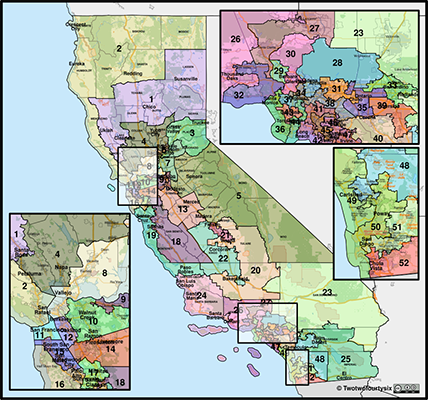
November: redistricting
On 4 November the voters of California approved Proposition 50, a plan to redraw the state’s congressional districts to favor Democrats. The initiative was prompted by plans to gerrymander the congressional delegations of Texas and other Republican-majority states.
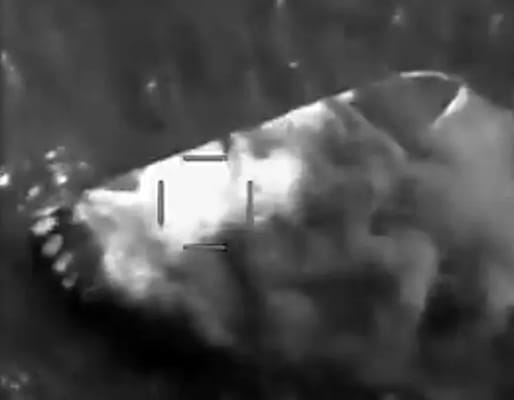
December: narco-terrorism
News in December was filled with stories about the 2 September “double tap” strike by the US military on a boat off the coast of Venezuela that the Defense Department claims was being used by “narco-terrorists” to smuggle narcotics into the US. As of 7 December, the US had conducted twenty-two such strikes, killing eighty-seven people—no evidence that any of these boats were smuggling drugs has been presented. Narco-terrorism has been in use since at least 1982 to refer to illegal drug trafficking that is used to fund terrorism or the use of terrorism to prevent enforcement of anti-drug-trafficking laws. But this recent use by the US government is broader, referring to any and all drug traffickers as narco-terrorists, even when there is no threat of terrorism or violence.
Discuss this post
Image credits:
2025: David Revoy. Licensed under the Creative Commons Attribution 4.0 International Deed. January: Montage created by Usermag.co. The individual images are taken from videos of unknown origin, undoubtedly copyrighted by their creators, but used under fair use doctrine as single frames from videos to illustrate the topic under discussion. February: Dogemuchwow.com, 2019. Original photo by Atsuko Sato, 2010. Fair use of a copyrighted image to illustrate the topic under discussion. March: Adam Tooze, 2022; Fair use of a copyrighted image to illustrate the topic under discussion. April: Vdp, 2005. Wikimedia Commons. Licensed under the Creative Commons Attribution-Share Alike 3.0 Unported license. May: Unknown photographer, 2025; Wikimedia Commons. Fair use of a low-resolution copy to illustrate the topic under discussion. July: Copyright holder unidentified, 2025. Fair use of two still frames from a video to illustrate the topic under discussion. August: Copyright holder unidentified, 2001. Fair use of a low resolution copy to illustrate the topic under discussion. September: Jan-Janko, 2025. Wikimedia Commons. Public domain image. October: Fred Schilling/SCOTUS, 2018. Wikimedia Commons. Public domain image. November: TwotwoFourtysix, 2025. Wikimedia Commons. Licensed under the Creative Commons Attribution-Share Alike 4.0 International license. December: US Department of Defense, 2025. Public domain image.

.png?ref=wordorigins-org.ghost.io)

.jpg?ref=wordorigins-org.ghost.io)
)_(new_version).svg?ref=wordorigins-org.ghost.io)